Procedures

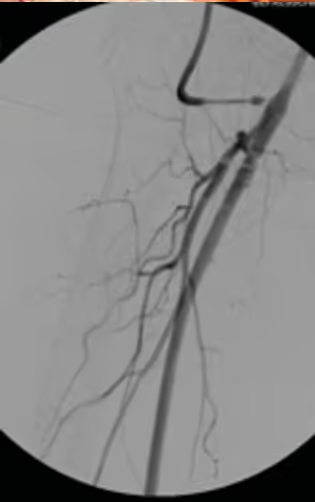
Femoro-popliteal supragenicular bypass (prosthesis)

Leaning targets

To perform a femoro-popliteal bypass (Dacron or PTFE, 6-8mm)to popliteal artery pars I

Create proximal side-to-end anastomosis in running suture technique

Create distal end-to-end anastomosis in running suture technique

All Steps in Detail

Access

  1. Cut down to femoral bifurcation
  2. Put vessel loops around common, deep and superficial femoral arteries
  3. Apply heparin and clamp the common femoral (horizontally!) and deep femoral arteries (soft clamp i.e. Yasargil clamp, or double loops)

Proximal anastomosis (side-to-end)

  1. Longitudinal arteriotomy from ostium of superficial femoral artery into common femoral artery, perform TEA if necessary
  2. Oblique and curved tailoring of the prosthesis (6mm-8mm Dacron or PTFE) to enable a 30° take off of bypass (end-to-side)
  3. Perform anastomosis in parachute and running suture technique
  4. Start suturing on your far (= your assistant's) side
  5. Direction of the stitches: prosthesis to be sutured from outside in, artery to be sutured from inside out
  6. Running suture, no change of direction or needle needed
  7. Flush and clamp prosthesis proximally, release clamp on common and deep femoral arteries to reinstall perfusion into deep femoral artery circulation

Distal anastomosis (end-to-end)

  1. Cut down to popliteal artery pars I (above knee)
  2. Clamp and transsect the distal superficial femoral artery/proximal popliteal artery
  3. Longitudinal arteriotomy into popliteal artery, with control of back bleeding using a clamp or a balloon, rinse locally with heparin
  4. Oblique and curved tailoring of vascular prosthesis (6mm-8mmDacron or PTFE)
  5. Perform an end-to-end anastomosis in parachute and running suture technique
  6. Direction of stitches: prosthesis to be sutured from outside in, artery to be sutured from inside out
  7. Running suture, no change of direction or needle required
  8. Flush and clamp prosthesis, release clamp on popliteal artery for back bleeding/flushing, tie anastomosis and allow reperfusion

Control of learning targets

Pictures and Drawings

No items found.

Courses Teaching this Procedure

Basic Vascular Surgery Techniques

Jan 18, 2026
 - 
Jan 20, 2026
More Information

Simulators Used for this Procedure

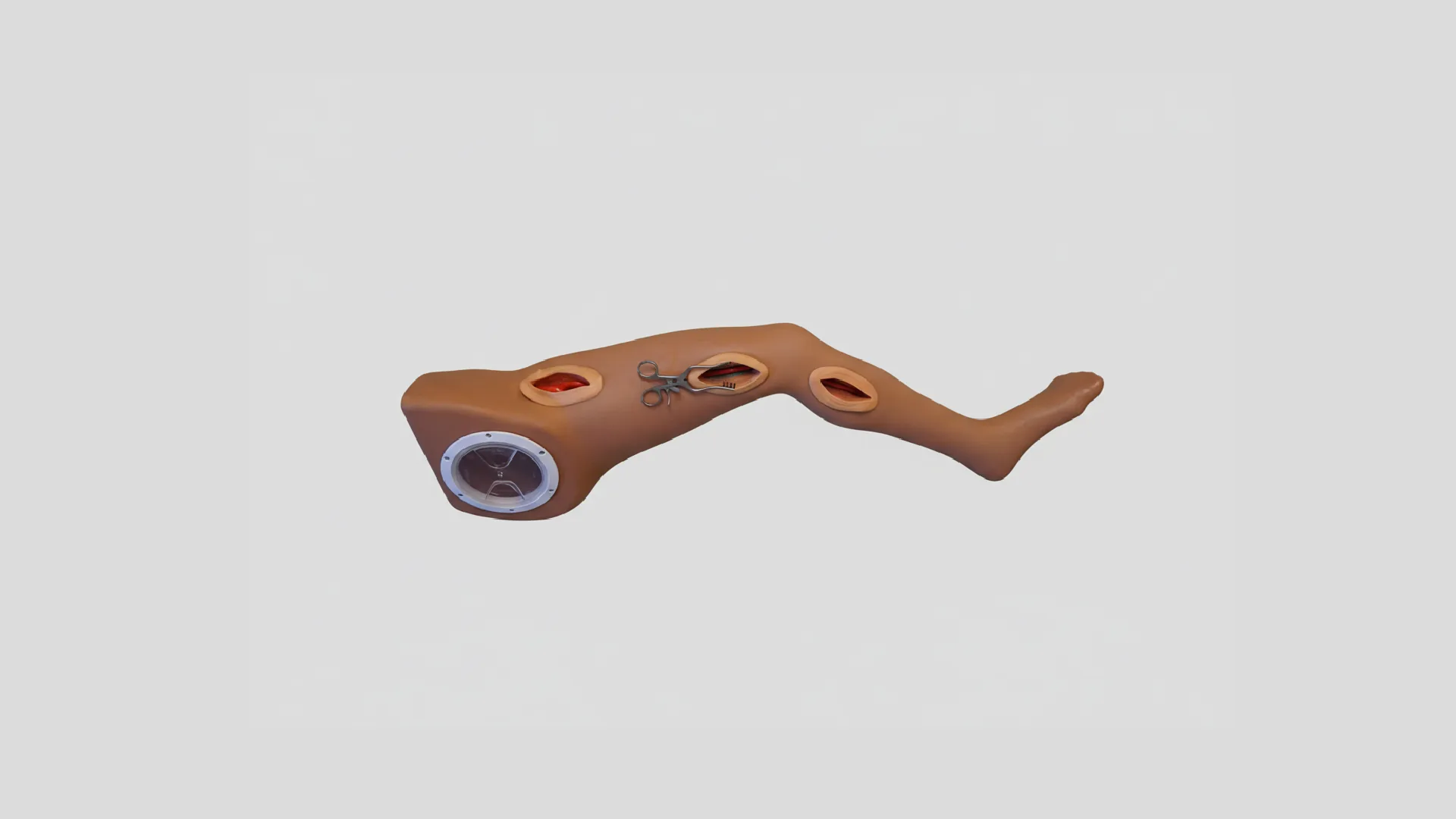
Leg Simulator

More Information

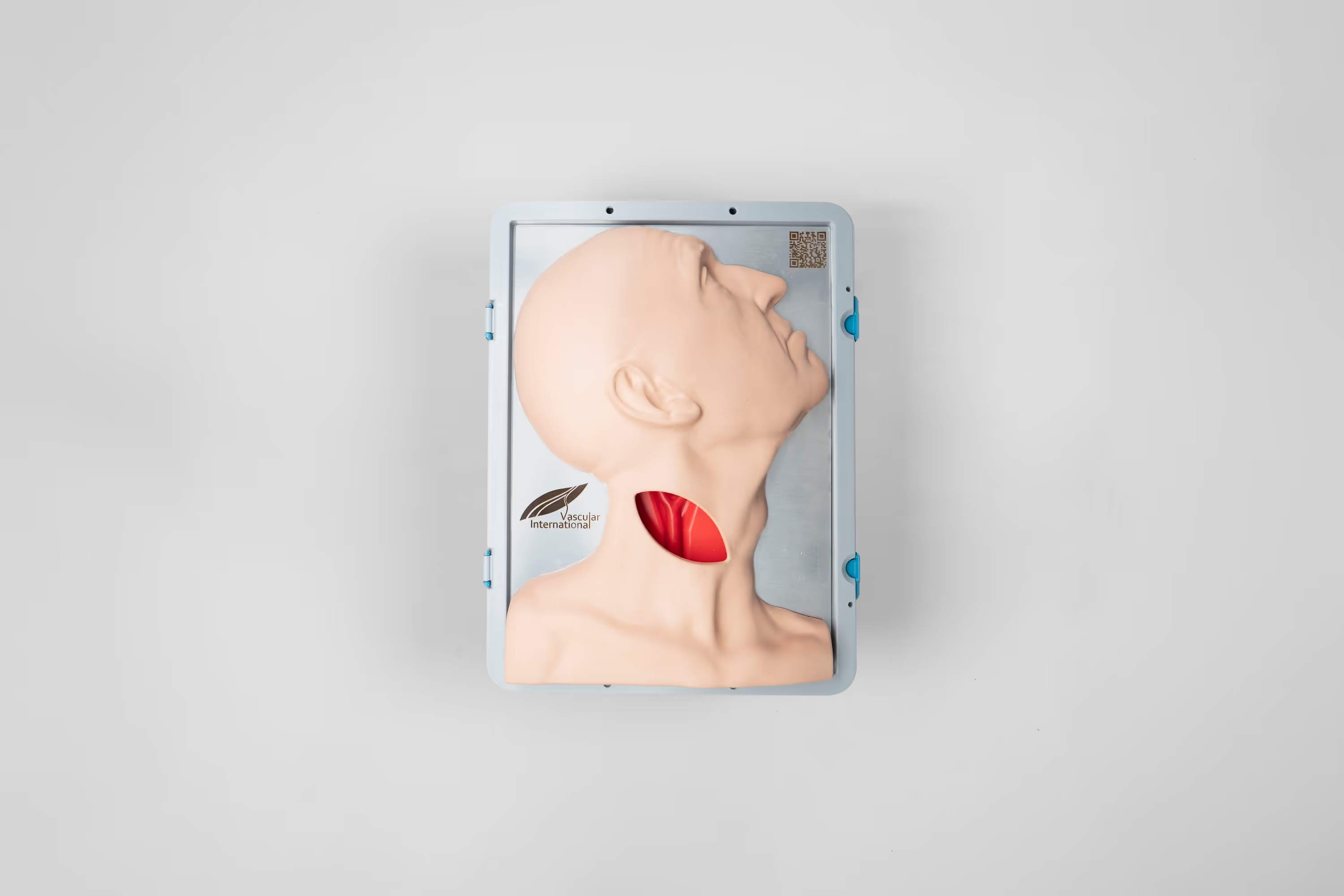
Carotid Simulator

More Information

About Vascular International

The Vascular International (VI) School for Vascular Surgery is dedicated to advancing the training and education of vascular surgical techniques through the use of lifelike models. With patient safety as the top priority, VI continuously strives to enhance vascular surgery training, ensuring the highest standards of safe and effective open and endovascular patient care.

About Us